Julia Deveroux
Exorcist FallsJulia Deveroux is the newest identified victim of the Sweet Sixteen Killer, a sixteen-year-old schoolgirl whose death becomes the decisive hinge between a serial-murder investigation and a far more intimate horror. First encountered through a photograph and a fleeting supernatural vision, Julia is presented as an innocent girl with no knowledge of the predator following her. Her murder forces Jason Crowder to confront the possibility that he has been made an instrument of violence, while the later revelation that Casey Hartman actually killed her turns Julia’s death into the proof of a concealed murderous inheritance.
Identity and Introduction
Julia appears in the investigation as the victim named in a newspaper report announcing that the Sweet Sixteen Killer has struck again. The headline declares that the death toll has reached eight, while the killing is already being described as a possible copycat crime because its apparent method differs from the earlier murders. The uncertainty surrounding the crime is therefore attached to Julia from the beginning: her death confirms that the danger has returned, but it also raises the possibility that the person responsible is not the original killer.
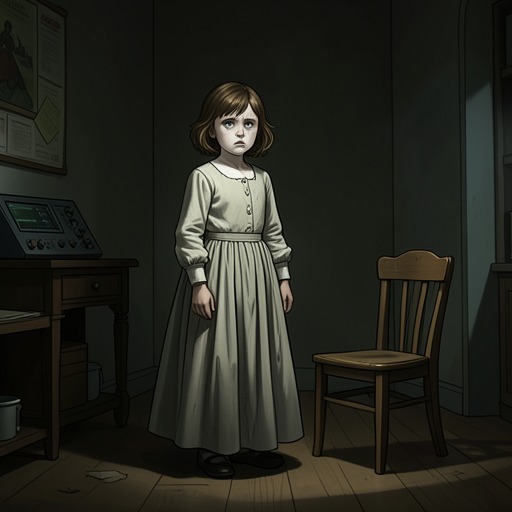
Jason later sees Julia’s photograph among the printed material assembled by Liz Hartman. She is shown in a school uniform, a visual detail that emphasizes both her youth and her ordinary public identity. The image does not reduce her entirely to a case number. Liz points to Julia’s picture when explaining her own fixation on the murders, and places it beside the faces of the seven earlier victims, each remembered as a girl who had anticipated a career, friendships, and family life. Julia thus becomes part of a collective portrait of interrupted futures rather than merely the eighth body in a series.
The Murder and Its Hidden Approach
Before Julia’s death becomes publicly known, Jason has already encountered her in a vision produced when Malephar emerges during Danny Hartman’s attempt to kill him. Among the faces glimpsed in Danny’s thoughts, Julia appears as a giggling schoolgirl walking with friends. She is described as innocent and unaware of the beast stalking her. This earlier appearance establishes a cruel temporal contrast: Jason sees her before the murder as a living person who does not understand her danger, then learns that she has become a corpse.
The reported circumstances of the killing place Julia in Farris Park. When Liz identifies the location, Jason immediately recognizes its importance and begins to suspect that Danny was not the only murderer. The place is not simply a setting in the case; it becomes the point at which the investigation turns toward Jason’s own divided consciousness. A later flash of memory shows Jason’s other self in the dark, tree-filled park, displaying a savage grin and sexually assaulting Julia. The vision is presented from a distance, as though Jason were watching a film, yet it implicates his own body and voice in the attack. Julia’s terror and inability to resist make the scene not only evidence of murder but also the image that destroys Jason’s confidence in his own identity.
Investigation, Misidentification, and Revelation
Julia’s death initially supports several incompatible explanations. The police’s reported time of death appears to rule out Danny’s responsibility if Danny was elsewhere at approximately nine o’clock, making a copycat crime seem to be the only available explanation. Tyler Raines had also told Jason that Danny had discussed the Deveroux girl and planned to conduct surveillance because a source had identified her as the next victim. That information suggests that Danny knew Julia was being targeted, but it does not initially prove that he killed her.
The evidence becomes more disturbing when Jason remembers that he had seen Julia in Danny’s thought-images before her death. He wonders whether Danny was the killer after all, whether a psychic connection linked Danny and Malephar, or whether Malephar had taken the identities of Danny’s future victims and used Jason to kill one before Danny could do so. These possibilities turn Julia into the center of a crisis in knowledge: the apparent visions may be predictions, memories, manipulations, or fragments of another person’s violence, and Jason cannot reliably distinguish his own actions from those imposed by the demon.
The later truth is more concrete and more personal. Jason learns that Tyler Raines did not kill Julia, even though Raines had been involved in other violence and possessed information about Danny. Danny murders Raines to protect his secret, then uses the circumstances to frame Jason. Jason eventually understands that the true murderer of Julia is Casey Hartman, who is living with his mother and sister in a luxurious house on Rosemary Road. Casey is therefore not merely connected to the case through family or acquaintance; he is the hidden perpetrator of the killing that had been attributed to a supernatural or police mystery.
Symbolic Afterlife and Narrative Significance
Julia’s death continues to shape the story after the murderer is identified. At St. Matthew’s, Joy Smith is remembered as one of the Sweet Sixteen victims and as someone who lived nearby, attended services with her aunt, and knew Casey. That connection likely helped draw Danny’s interest to her, showing how the victims’ ordinary social relationships are exploited by the killers. Julia’s case similarly demonstrates that the murders are not distant atrocities: each victim belongs to a network of family, school, neighborhood, and memory.
Julia’s emerald-lined crucifix becomes the material sign of the crime’s concealed truth. Casey presents it to Jason during a confrontation and admits that Uncle Danny coached him, turning the object into proof that Casey has inherited both the knowledge and the ritualized cruelty of the killing. The crucifix’s religious associations intensify the betrayal. An object associated with Julia’s identity and death is transformed into an instrument of accusation against Jason, who is already burdened by what he did to Peter Sutherland.
Julia’s corpse is also encountered through the grotesque vision of Sister Rebecca’s murder. In that scene, Jason sees Rebecca nailed to a wall and mutilated, while Julia’s death remains part of the chain of atrocities that has led him there. Her image is repeatedly displaced into photographs, visions, memories, and accusations; the narrative rarely permits her an independent voice after death. That pattern is itself significant. Julia is made visible through the faces of victims and through the moral shock of those who see what happened to her, but the killers repeatedly convert her body into evidence, inheritance, or leverage.
For Jason, Julia is the victim who transforms abstract guilt into personal responsibility. He asks whether he could have prevented her death after recognizing her from Malephar’s vision, and later must accept that the violence was committed by Casey while Jason’s own mind and body had been made to resemble the murderer’s. Julia’s story therefore exposes the novel’s central conflict between perception and culpability: supernatural interference can blur agency, but the victim’s face remains a demand for recognition. Her death is the point at which the investigation’s shifting explanations finally converge on a human successor to the Sweet Sixteen Killer, leaving Casey as the sinister heir of the murders and Julia as the clearest evidence of what that inheritance has cost.